

When Is Ultrasound-Guided Biopsy the Right Choice for Your Pet?
If your pet has a mass or abnormal ultrasound finding, does that automatically mean they need a biopsy?
Many pet parents assume that when imaging identifies a mass or abnormal organ, the next step is automatically a biopsy. While ultrasound-guided biopsy can be an extremely valuable diagnostic tool, the reality is often more nuanced.
In some cases, a biopsy provides important answers that help guide treatment decisions. In others, less invasive testing may provide enough information on its own – or surgery may actually be the better diagnostic option. The key is determining which approach will provide the most useful information as safely and effectively as possible.
At VSP, ultrasound-guided biopsy is used thoughtfully and selectively as part of a larger diagnostic strategy rather than as a routine first step.
What Is an Ultrasound-Guided Biopsy?
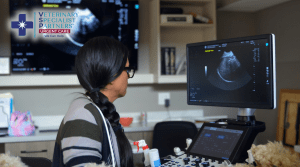
An ultrasound-guided biopsy is a procedure in which a small needle is guided into an abdominal organ or mass using real-time ultrasound imaging. The goal is to collect a tissue sample for evaluation by a pathologist to help identify the underlying disease process.
Because ultrasound provides live imaging during the procedure, clinicians can carefully target specific areas while avoiding nearby structures. Compared to surgical biopsy, this approach is less invasive and typically involves a shorter recovery period.
However, “less invasive” does not always mean “better” in every situation.
Why Biopsy Is Not Always the First Step
One of the most common misconceptions about biopsy is that it is always the fastest or most accurate way to reach a diagnosis. In reality, many patients begin with a much less invasive procedure called an ultrasound-guided aspirate.
Aspirates use a very small needle to collect individual cells for evaluation. In many cases, cytology from an aspirate provides sufficient information to guide treatment without the need for a more invasive biopsy.
Even when an aspirate is inconclusive, the next step is not automatically biopsy. Veterinarians must also consider:
- Whether the mass can be safely removed surgically
- Whether additional imaging would provide more useful information
- Whether biopsy results would actually change treatment decisions
- Whether the risks of the procedure outweigh the benefits
This is why experienced clinicians often approach biopsy as a carefully selected tool rather than a default next step.
When Is Ultrasound-Guided Biopsy Most Helpful?
Ultrasound-guided biopsy is often most valuable when less invasive testing has not provided clear answers and surgery is not considered the best option.
For example, biopsy may be recommended when:
- A mass cannot be safely removed
- Cytology results are inconclusive
- More detailed tissue architecture is needed
- Surgery would carry significant risk
- A diagnosis is needed to guide treatment planning
In these situations, biopsy can provide important information that helps determine the safest and most appropriate next steps for the patient.

Sometimes Surgery Provides Better Answers
This is the part many pet parents find surprising: sometimes surgery actually provides a more accurate diagnosis than needle biopsy.
A needle biopsy only samples a very small portion of tissue. If the disease is unevenly distributed throughout an organ or mass, there is a risk that the sample may not fully represent what is actually happening. This is known as a sampling error.
When a mass can be safely removed, surgery may allow both diagnosis and treatment to happen at the same time while also providing a larger, more representative tissue sample for the pathologist to evaluate.
For this reason, biopsy is not always viewed as the “best” or “most advanced” option simply because it is less invasive.
Why Liver Disease Can Be Especially Challenging
The limitations of needle biopsy become particularly important when evaluating liver disease.
Many liver conditions are patchy or diffuse, meaning that different areas of the liver may look different from one another. Because an ultrasound-guided biopsy only collects a very small core of tissue, the sample may not fully represent the overall disease process.
One study comparing ultrasound-guided liver biopsy samples to surgically-obtained wedge biopsies found lower-than-expected agreement rates between the two methods.
This does not mean ultrasound-guided biopsy is ineffective, but it does highlight why diagnostic decisions must be individualized based on the patient, the suspected disease process, and the quality of information needed to guide treatment.
Is Ultrasound-Guided Biopsy Safe?
Ultrasound-guided biopsy is generally considered safe when performed by experienced clinicians, but it is still more invasive than a simple aspirate and does carry some risk.
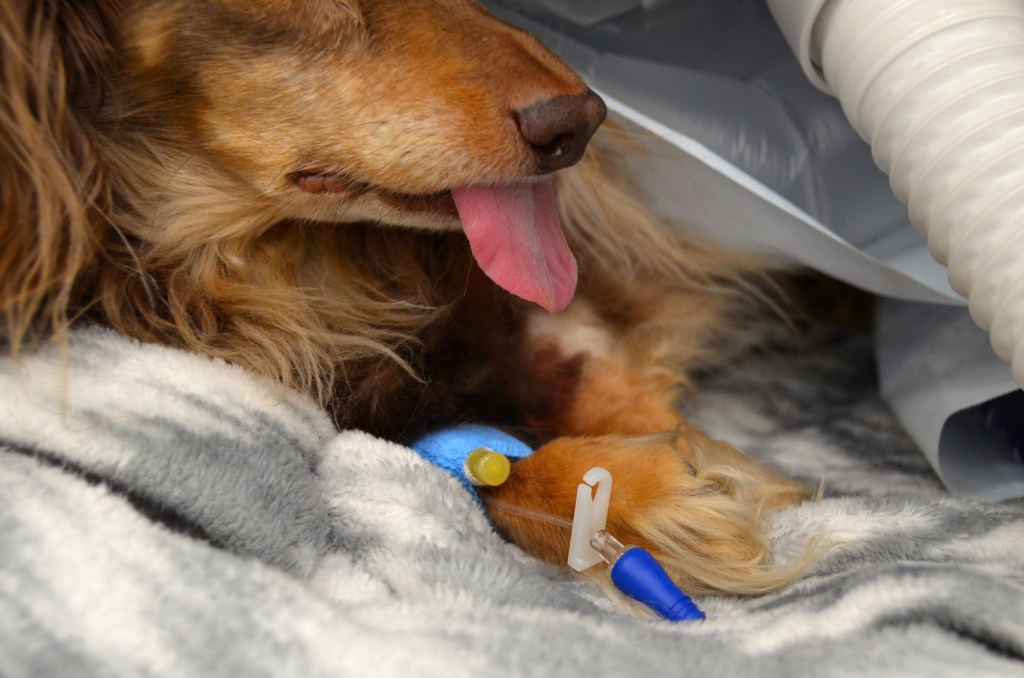
The primary concern is bleeding, especially when sampling organs such as the liver or spleen. Because of this, pets are typically sedated or anesthetized and monitored closely after the procedure.
Most pets recover well, but careful case selection is important to ensure the procedure is both safe and worthwhile.
Biopsy results are not immediate, as tissue samples must be processed and reviewed by a pathologist, which generally takes several days.
A More Thoughtful Approach to Diagnostics
At VSP, the goal is not simply to perform more testing – it is to choose the diagnostic approach most likely to provide meaningful answers while minimizing unnecessary risk.
In many cases, this means starting with less invasive testing, considering surgical options carefully, and reserving biopsy for situations where it will truly impact treatment decisions.
Ultrasound-guided biopsy can be an extremely valuable tool, but the best diagnostic plan is rarely one-size-fits-all. By tailoring recommendations to each patient’s individual situation, we aim to balance diagnostic accuracy, patient safety, and quality of care.
Trying To Decide Whether a Biopsy Is the Right Next Step?
An ultrasound-guided biopsy can sometimes provide important answers, but it is not always the best or safest next step for every patient. Choosing the right diagnostic approach depends on your pet’s condition, the location of the abnormality, and whether the results will meaningfully change treatment decisions.
At VSP, we take a thoughtful, individualized approach to diagnostics to help pets receive the most effective care with the least unnecessary risk.