
Advanced Diagnostic Imaging for Pets
The diagnostic imaging services at VSP allow the non-invasive visualization of a pet’s internal organs and structures, enabling the accurate diagnosis of various conditions like bone fractures, internal tumors, foreign objects, organ abnormalities, and more. Our veterinary diagnostic imaging technology creates detailed health assessments, leading to better treatment plans and improved outcomes.
Benefits of {Veterinary
Diagnostic Imaging}
Here is how advanced veterinary imaging technology can help your pet.
Accurate diagnosis
Provides detailed images to identify the cause and extent of a pet’s illness or injury, allowing for targeted treatment.
Early detection
Can detect diseases in their early stages when treatment is most effective.
Non-invasive
Most imaging techniques are non-invasive, minimizing discomfort for the pet.
Treatment planning
Helps guide surgical planning by visualizing the affected area and its surrounding structures.
Monitoring progress
Enables vets to track the progression of a disease or the effectiveness of treatment over time.
{Why VSP} for Pet Diagnostics?
When your pet is sick, you want real expertise, not just guesses. That’s why our team of veterinary specialists uses advanced tools like vet CT scans, fluoroscopy, and ultrasound to actually see what’s wrong. Additionally, we’ll keep you and your regular veterinarian informed every step of the way, so your pet receives proper care.
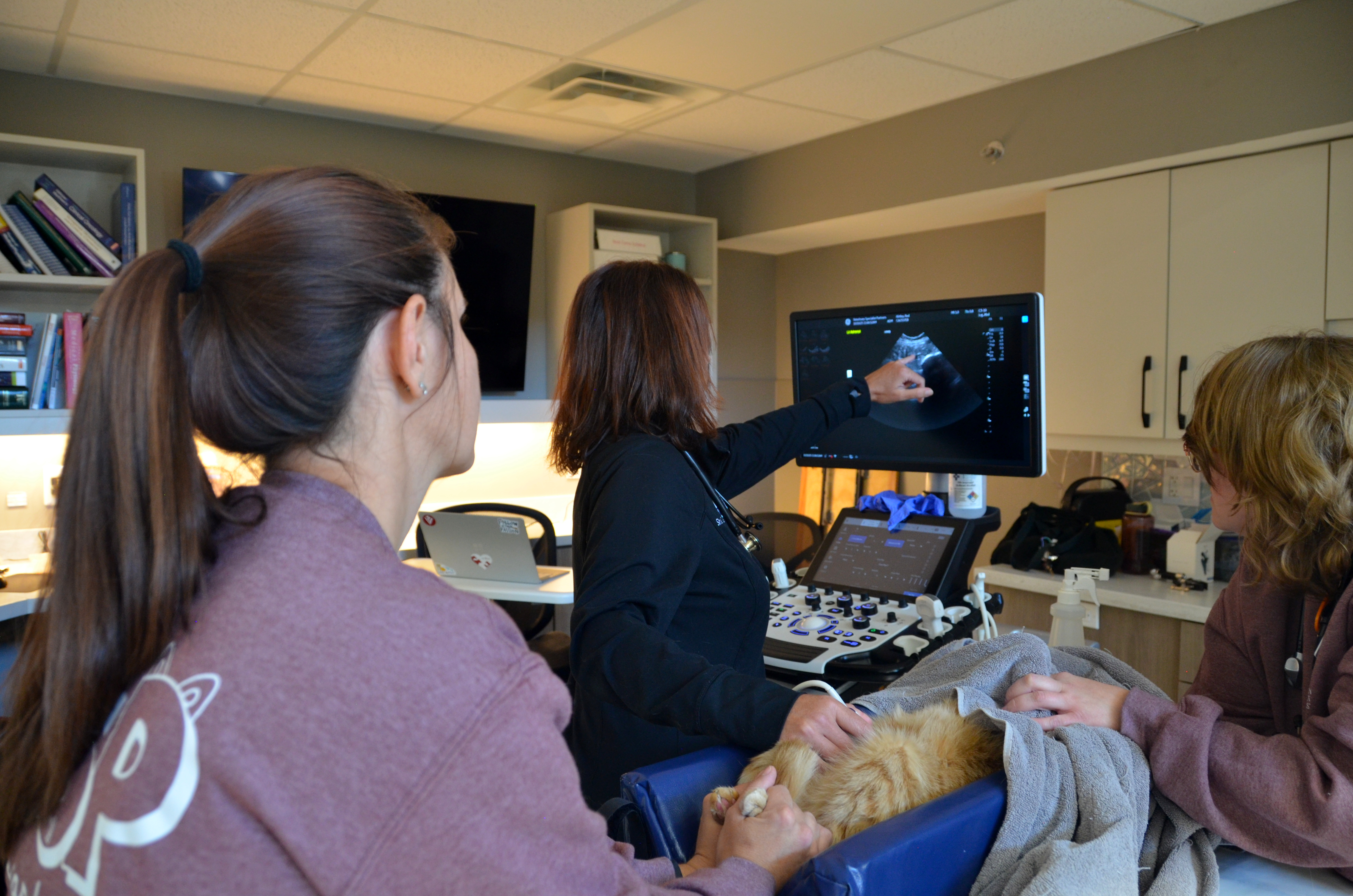

Available {Imaging Options} at VSP
At our hospital, we provide non-invasive visualization of your pet’s internal structures using advanced technologies like:
- Digital Radiography (X-rays)
- Ultrasound
- 64-Slice Computed Tomography (CT)
- Fluoroscopy
- Echocardiogram
Frequently Asked {Questions}
What is diagnostic imaging and why might my pet need it?
When your pet is showing symptoms that aren’t easily explained – like limping, sudden pain, vomiting, trouble breathing, or unexplained weakness – it’s normal to feel worried and uncertain. Diagnostic imaging includes tools like X-rays, ultrasounds, and advanced scans that help us see inside your pet’s body. These tools give us answers that exams alone cannot, helping guide clearer, faster, and more confident care.
What do the different imaging tests do?
At VSP, we use several different types of imaging, including X-rays (to look at bones, lungs, and internal organs); ultrasound (to evaluate soft tissues and organs in real time); and CT advanced imaging (for detailed views of complex structures). Each test gives a different type of insight, and we choose the right one based on your pet’s needs – because seeing the whole picture matters.
Is diagnostic imaging safe for my pet?
Yes! We use imaging technology routinely and safely in veterinary medicine. Your pet’s comfort and safety are top priorities, and we use the lowest effective settings and gentle handling protocols so that imaging can guide care without adding stress. Most diagnostic imaging, like X-rays and ultrasounds, are completely non-invasive and painless. If a procedure requires sedation or anesthesia (only sometimes needed for very clear imaging), we’ll explain the process and safety measures thoroughly.
How do imaging results affect treatment decisions?
Imaging helps your veterinarian see what can’t be felt or heard. Whether it’s a subtle fracture, organ abnormality, or internal disease process, imaging gives clarity. This clarity allows us to create a targeted treatment plan, avoiding guesswork and focusing on what will help your pet feel better sooner.
Can imaging help avoid unnecessary surgery or procedures?
Absolutely. Diagnostic imaging often provides answers that let us choose less invasive, more precise care options. When we can see the root of the issue, we can often avoid exploratory surgeries or lengthy guesswork, focusing on what’s truly needed for your pet.
Do I need a referral for diagnostic imaging?
Lots of diagnostic imaging appointments are scheduled through referral from your primary care vet, who knows your pet’s medical history best, but referrals are not required to meet with our veterinary specialists for imaging. If you have questions or concerns about your pet’s symptoms or condition, feel free to reach out to us directly – we can help.
Will my primary veterinarian stay involved in my pet's care?
You don’t have to choose between specialty care and your trusted veterinarian. We work closely with referring doctors and share detailed findings and recommendations. This team-based approach ensures your pet receives consistent, coordinated care at every stage.